-
Conecsus LLC
106 Tejas Drive
Terrell, Texas 75160
Toll Free: (855) 846-5323
Phone: (972) 551-5900
FAX: (972) 551-5901

Technology
At Conecsus, we’ve invested in state-of-the-art tools and technology to ensure precise, accurate materials analysis of incoming samples. We also use these tools in parallel to double- and triple-check results when warranted. Below are brief summaries of some of the advanced laboratory instruments that we routinely use for material analysis:
Spectro SpectroMaxX Stationary Spark Spectrometer
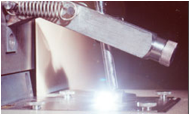
Used for metallic elements in solid samples. An electric arc or spark is passed through the sample, heating the sample to a high temperature to excite the atoms in it. The excited analyte atoms glow and emit light at various wavelengths that are collected by common spectroscopic methods. Software packages that specialize in Tin/Lead alloys are used to further refine the collected data.
Spectro Genesis Inductively Coupled Plasma
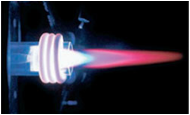
Used for a wide array of elements in liquid samples. The plasma flame excites the elements in the atomized liquid and simultaneously records the light emitted at all wavelengths from vacuum ultraviolet to visible. An array of ten different calibration solutions is used to calibrate the instrument each time it is run and thus negates the effect of instrument drift and other types of day-to-day variability.
Fire Assay
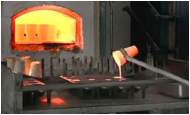
Used for precious metal determination. This classic method fuses a solid sample with litharge-based flux and the precious metal is extracted as a lead button. The lead button is then cupelled to give a dore bead and a percent recovery is calculated based upon the original sample weight.
Bruker AXS S4 Explorer X-Ray Fluorescence Spectrometer
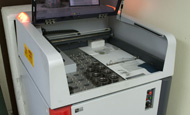
Used to analyze solid samples in powder or bulk form. The XRF is a sequential 1000 watt wavelength dispersive XRF. It captures all elements except Li, Be, H and He. It can give a very good estimate in a short amount of time or a unique method can be created to analyze a specified set of elements very precisely.
Niton XL2 Portable X-Ray Fluorescence Spectrometer
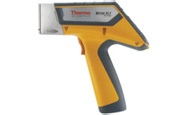
Used to analyze solid samples in powder or bulk form. The Niton functions in much the same way as the Bruker XRF with the added feature that it is portable and can be taken to material that is not easily sampled or needs a rapid analysis for sorting or storage purposes. It captures all elements except Li, Be, H and He. It can give a very good estimate in a short amount of time and is an excellent tool to use for the confirmation of a result from another instrument.
Mettler-Toledo T50 Titrator with Rondo 20 Sample Changer
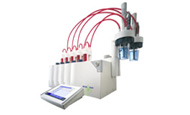
Used to automate any titration assay to a degree of accuracy orders of magnitude higher than possible with the naked eye while at the same time allowing the operator to walk away and work on other tasks. This instrument provides an excellent confirmatory test to correlate with results from our other lab instruments and methods.
Claisse Peroxide Fluxer
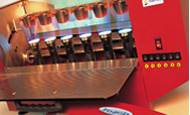
Allows for the automation of peroxide fusions that are required as part of the sample preparation for the ICP. Powder samples can be fused in batches of six while the operator can work on other tasks. This instrument also helps to reduce any sample-to-sample variability that may be introduced from fusing samples one-at-a-time manually.
